
Cryptocurrency bitcoin price
The live Bitcoin price today is $103,683 USD with a 24-hour trading volume of $50,210,560,750 USD. We update our BTC to USD price in real-time. Bitcoin is up 0.77% in the last 24 hours blackjack online for money. The current CoinMarketCap ranking is #1, with a live market cap of $2,059,611,044,009 USD. It has a circulating supply of 19,864,496 BTC coins and a max. supply of 21,000,000 BTC coins.
Bitcoin is becoming more political by the day, particularly after El Salvador began accepting the currency as legal tender. The country’s president, Nayib Bukele, announced and implemented the decision almost unilaterally, dismissing criticism from his citizens, the Bank of England, the IMF, Vitalik Buterin and many others. Since the Bitcoin legal tender law was passed in September 2021, Bukele has also announced plans to build Bitcoin City, a city fully based on mining Bitcoin with geothermal energy from volcanoes.
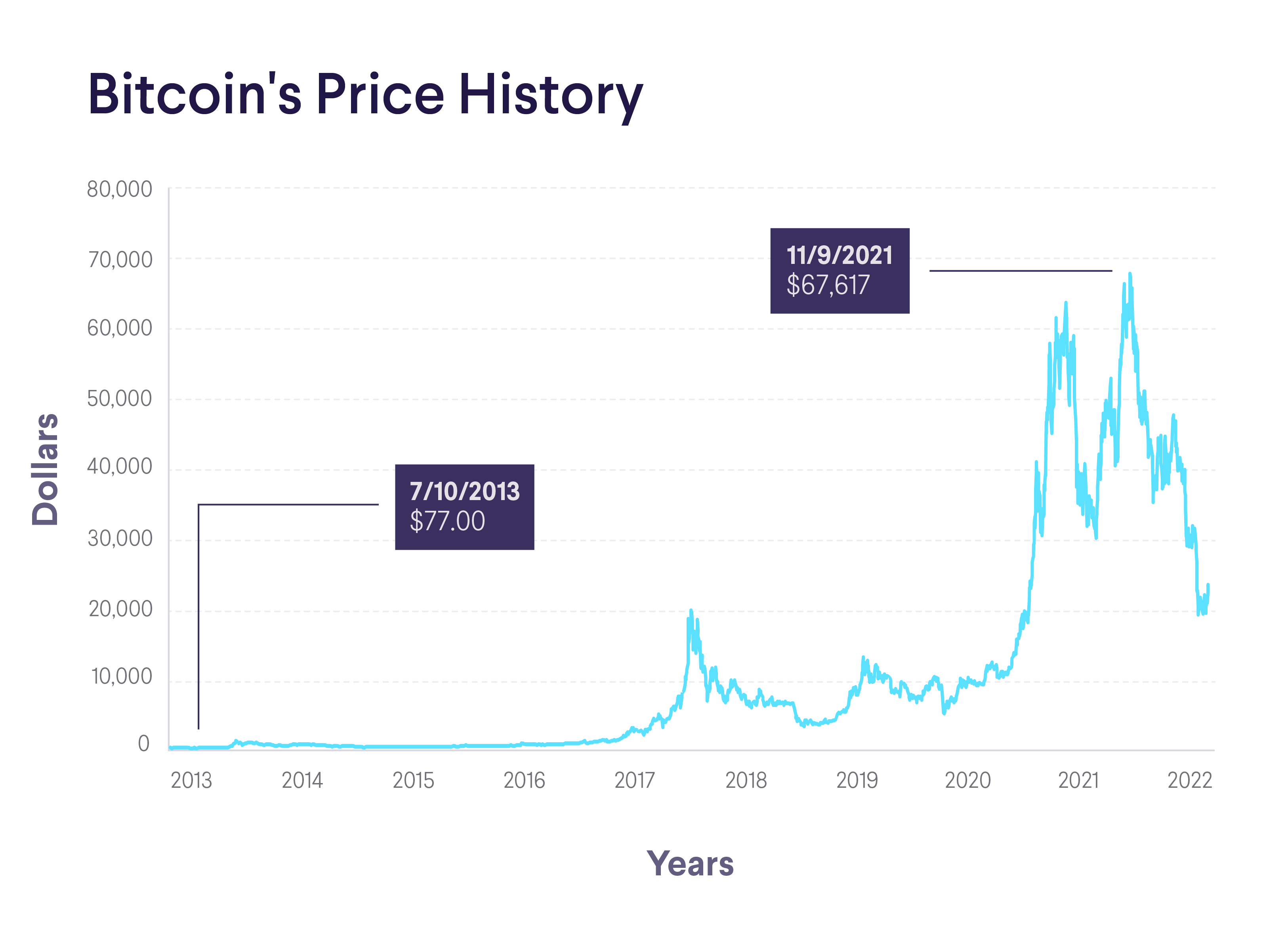
Thanks to its pioneering nature, BTC remains at the top of this energetic market after over a decade of existence. Even after Bitcoin has lost its undisputed dominance, it remains the largest cryptocurrency, with a market capitalization that surpassed the $1 trillion mark in 2021, after Bitcoin price hit an all-time high of $64,863.10 on April 14, 2021. This is owing in large part to growing institutional interest in Bitcoin, and the ubiquitousness of platforms that provide use-cases for BTC: wallets, exchanges, payment services, online games and more.
A few years ago, the idea that a publicly traded company might hold Bitcoin on its balance sheets seemed highly laughable. The flagship cryptocurrency was considered to be too volatile to be adopted by any serious business. Many top investors, including Warren Buffett, labeled the asset a “bubble waiting to pop.”
Cryptocurrency news
On May 12, Hobbs rejected Senate Bill 1373, which sought to establish a Digital Assets Strategic Reserve Fund. The fund would have allowed Arizona to hold crypto assets obtained through seizures or legislative allocations.
VanEck joins a burgeoning field of traditional financial firms that have launched RWA tokenized funds, with competitors including BlackRock and Franklin Templeton. In January, Apollo, an investment firm with $751 billion in assets under management, also launched a private credit tokenized fund.
The fund, called VBILL, will be initially available on Avalanche, BNB Chain, Ethereum and Solana blockchains, VanEck said in a May 13 statement. The fund’s minimum subscriptions start at $100,000 for investments running on Avalanche, BNB Chain, and Solana, while the minimum subscription on Ethereum is $1 million.
Investment firm VanEck is launching a tokenized real-world asset (RWA) fund that offers exposure to US Treasury bills, developed in partnership with tokenization platform Securitize. The initiative places VanEck among a growing number of traditional finance firms entering the RWA tokenization space.
Its Bitcoin holdings are the third-largest among public companies, trailing only Strategy, formerly MicroStrategy and Bitcoin mining firm MARA Holdings at 568,840 Bitcoin and 48,237 Bitcoin, respectively.
Cryptocurrency market
IEO stands for Initial Exchange Offering. IEOs share a lot of similarities with ICOs. They are both largely unregulated token sales, with the main difference being that ICOs are conducted by the projects that are selling the tokens, while IEOs are conducted through cryptocurrency exchanges. Cryptocurrency exchanges have an incentive to screen projects before they conduct a token sale for them, so the quality of IEOs tends to be better on average than the quality of ICOs.
However, Bitcoin is far from the only player in the game, and there are numerous altcoins that have reached multi-billion dollar valuations. The second largest cryptocurrency is Ethereum, which supports smart contracts and allows users to make highly complex decentralized applications. In fact, Ethereum has grown so large that the word “altcoin” is rarely used to describe it now.
CoinCodex provides all the data you need to stay informed about cryptocurrencies. You can find cryptocurrency charts for more than 41369 coins, and access key data such as up-to-date prices, all-time high price, cryptocurrency market cap, trading volume and more. The crypto charts provided by CoinCodex are incredibly flexible – you can watch real-time prices or select between 8 pre-defined time frames, ranging from 24 hours to the entire price history of the coin. If you need more precision, you can select a custom date range. CoinCodex also gives you the ability to compare the price action of different cryptocurrencies on a single chart.
Let’s say that a company creates Stablecoin X (SCX), which is designed to trade as closely to $1 as possible at all times. The company will hold USD reserves equal to the number of SCX tokens in circulation, and will provide users the option to redeem 1 SCX token for $1. If the price of SCX is lower than $1, demand for SCX will increase because traders will buy it and redeem it for a profit. This will drive the price of SCX back towards $1.

IEO stands for Initial Exchange Offering. IEOs share a lot of similarities with ICOs. They are both largely unregulated token sales, with the main difference being that ICOs are conducted by the projects that are selling the tokens, while IEOs are conducted through cryptocurrency exchanges. Cryptocurrency exchanges have an incentive to screen projects before they conduct a token sale for them, so the quality of IEOs tends to be better on average than the quality of ICOs.
However, Bitcoin is far from the only player in the game, and there are numerous altcoins that have reached multi-billion dollar valuations. The second largest cryptocurrency is Ethereum, which supports smart contracts and allows users to make highly complex decentralized applications. In fact, Ethereum has grown so large that the word “altcoin” is rarely used to describe it now.
Pi network cryptocurrency
Out of 100 billion Pi coins, a big slice (80%) is meant for the community. The idea is for Pi coins to be used for sending money between people, buying things in its own marketplaces (like Pi Chain Mall or Daabia Mall), and using a growing number of apps for shopping, social stuff, games, and maybe even finance (DeFi). Things built into the platform itself, like the Pi Ad Network and special features in its chat for staking Pi, are also meant to get people using it.
Dr. Chengdiao Fan holds a Stanford PhD in Anthropological Sciences, harnessing social computing to unlock human potential on a global scale. Chengdiao is building Pi Network to mobilize individuals all over the world to participate and be rewarded for their contributions, and establish an inclusive ecosystem for global citizens to unleash and capture their own agency, and in turn create utilities and productions for society and the world.
Cryptocurrency prices are subject to high market risks and price volatility. You should invest in projects and products that you are familiar with and where you understand the risks involved. You should carefully consider your investment experience, financial situation, investment objectives and risk tolerance and consult an independent financial adviser prior to making any investment. This material should not be construed as financial advice. Past performance is not a reliable indicator of future performance. The value of your investment can go down as well as up, and you may not get back the amount you invested. You are solely responsible for your investment decisions. MEXC is not responsible for any losses you may incur. For more information, please refer to our Terms of Use and Risk Warning. Please also note that data relating to the above-mentioned cryptocurrency presented here (such as its current live price) are based on third party sources. They are presented to you on an “as is” basis and for informational purposes only, without representation or warranty of any kind. Links provided to third-party sites are also not under MEXC’s control. MEXC is not responsible for the reliability and accuracy of such third-party sites and their contents.
Despite the controversies, Pi Network has maintained an engaged community throughout its more than five-year existence. The project’s recent initiatives, including the Pi App Incubator and Pi Influencer Program, suggest ongoing development efforts. However, community sentiment appears increasingly divided, with some long-time supporters expressing frustration over perceived “broken promises”.
Pi Network was founded by Dr. Nicolas Kokkalis and Dr. Chengdiao Fan, both of whom have PhDs from Stanford University and a passion for improving human lives through technology. Dr. Nicolas Kokkalis is a Stanford PhD in EE and postdoc in CS with research on distributed systems and human-computer interaction. His work focuses on combining distributed systems and human computer interaction to bring cryptocurrency to everyday people. As a strong and long-term believer of the technical, financial and social potential of cryptocurrencies, he is determined to move them beyond their current limitations and is committed to bringing the power of blockchain to more people.